Femi Otedola just invested N43bn more into First HoldCo. Here's what that move — and my own journey from Alaba to Banex Mall — taught me about building a business that lasts.
The News Cycle Moved. I Stayed With the Question.
On Tuesday, 13 May 2026, Femi Otedola did something that stopped the Nigerian Exchange. He bought 549.5 million shares of First HoldCo — the parent company of First Bank — at N79 per share. The total bill came to N43.41 billion. In a single trading session. BusinessDay called it "one of the largest single-day investments by an individual in the history of the Nigerian Exchange Limited". Newswatch reported that trading volume crossed 575 million shares by close — the highest recorded so far in 2026.
The headlines did what headlines do. They focused on the number. They debated whether one man should hold 19.36% of a systemically important bank. They noted — correctly — that the stock had already gained over 57% year to date and that First HoldCo posted a 72% jump in profit before tax for Q1 2026, a N321 billion result placing it second in Nigeria's tier-one banking profit league behind only Zenith Bank.
I am not here to debate Otedola's stake. I run a mall in Lekki. I am not a financial analyst. But when I read the coverage, one question stayed with me long after the news cycle moved on: what separates a hustler from a CEO? Not in title. In mindset. In architecture. In the quiet infrastructure that determines whether a business lives past its founder or collapses the moment they step away.
I have been both. And the distance between them is something I am still measuring.
Alaba Taught Me How to Hustle. Mining Showed Me What a Business Actually Is.
My name is Kingsley Nweke, but everyone calls me King. Before Banex Mall, I sold electronics in Alaba International Market. I learned to spot counterfeit components by weight and touch. I built a verification system — receipts, serial numbers, signed test videos — after a buyer tried to scam me out of ₦180,000 by transferring ₦180 instead. I ran through the market and tracked him to F-Line before he could hide the goods. That was hustling. Fast reflexes. Street logic. Survival.
But across my ventures — solar, wines, real estate, legal advisory — one business fundamentally rewired how I think. Mining. The mining business shifted my logic and my energy to what business can and should look like. It was not the most glamorous. It was not the one people asked about at parties. But it taught me something permanent: a real business is not a series of deals. It is a system that produces value whether you are in the room or not.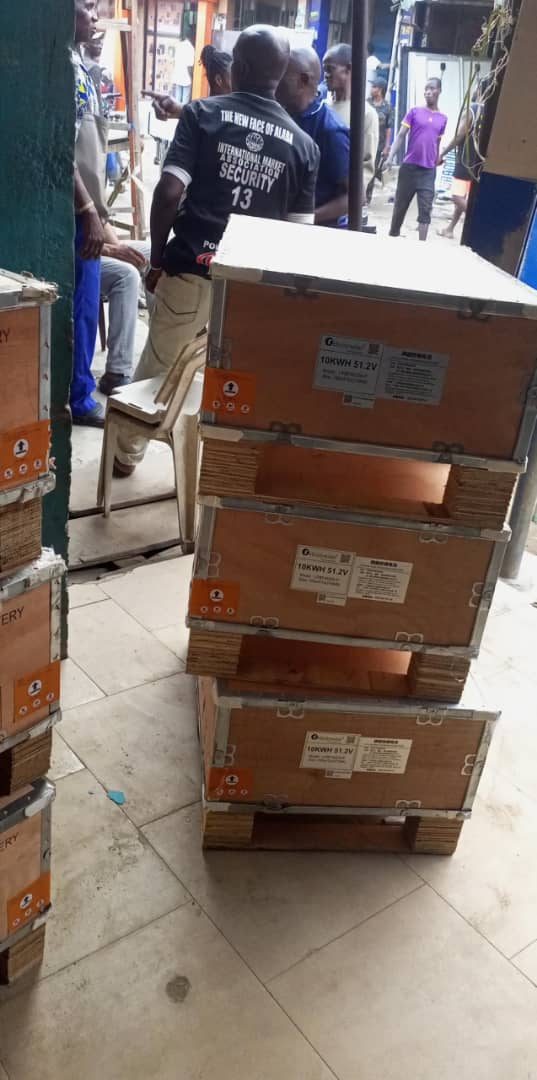
Otedola's Geregu Power exit in December 2025 followed the same logic. He sold his 77% controlling stake for roughly $750 million. Wale Tinubu, Group CEO of Oando, described it as "a masterclass in strategic investing," adding: "The mark of an exceptional investor is not simply in making an investment. The mastery lies in knowing when to exit". Otedola built Geregu into one of Nigeria's most efficient power generation companies, then exited on his terms to redeploy capital into banking. EnergyNews.Africa confirmed he plans to "redeploy proceeds from the transaction into financial sector investments, continuing a pattern of shifting exposure as opportunities emerge".
A hustler chases the next deal. A CEO builds the machine, then decides when to let someone else run it.
What Otedola's Book Actually Says — and What It Doesn't
Otedola's memoir, Making It Big: Lessons from a Life in Business, has become required reading for Nigerian entrepreneurs. The Eagle Online distilled eleven principles from its 286 pages: Dream Big, Start Early. Resilience amid Setbacks. Strategic Reinvention. Disruption Creates Opportunity. Understand Political and Economic Realities. Access to Power Matters. Branding, Marketing, Publicity Still Work. Philanthropy Builds Legacy.
But the story that stays with me is the one he told The Sun about his early days: "To prosper, accept that nothing is beneath you. In the beginning, I went around pushing diesel, riding in the van beside Samson, the driver. I always wore jeans and a polo shirt as we went from door to door. My friends would tease me. I took the wisecracks in stride. I didn't feel that selling diesel was beneath me. I had my wife and children to look after; there were school fees to pay".
That is not a billionaire's anecdote. That is a hustler's origin story. The difference is what happened after the door-to-door phase ended. He hired 14 sales executives — all young, driven women — gave them new cars, and sent them after Nestlé, Coca-Cola, Flour Mills, and the Dangote Group. He moved from small-scale buying to bulk purchasing, rented storage tanks, acquired a tank farm, and eventually began importing diesel in large vessels. At its peak, Zenon Oil was generating around $6 million in monthly revenue.
The transition from hustler to CEO is not a personality change. It is a structural one. It is the moment you stop being the product and start being the architect of the system that produces the product.
Three Principles I Did Not Steal From Otedola. I Lived Them.
Principle 1: Weaponised Silence Is a Strategy
I am a social media hermit. I have said this before. I do not follow celebrities. I do not track gossip. I do not post my life in real time. Some people see that as a disadvantage in an era of personal branding. I see it differently. I innately understand weaponised silence. Not every thought needs an audience. Not every move needs a press release. Not every win needs a screenshot.
Otedola operates the same way. He does not give weekly interviews. He does not react to criticism in real time. He moves, then lets the NGX filing speak for him. In December 2025, he quietly acquired N14.8 billion in additional First HoldCo shares. In May 2026, he quietly added another N43.41 billion. No press conference. No victory lap. Just regulatory filings and market movements that did the talking.
For entrepreneurs who feel pressure to perform publicly — to post every milestone, to argue with every critic, to justify every decision — there is a lesson here. Silence is not absence. Silence is accumulation. When you finally speak, the weight behind your words should be measured in years, not reactions.
Principle 2: You Do Not Need a Business Idea. You Need a Problem-Solving Protocol.
If a young entrepreneur asked me for advice today, I would not ask them about their idea. Ideas are cheap. Every Nigerian has three business ideas before breakfast. I would ask them: how have you prepared for solving different problems? What is your risk mitigation protocol? What happens when your supplier disappears? When your shipment is held at the port? When your biggest client walks away? When a regulator calls you at 2 a.m.?
Having a business idea is one in a million. Having risk mitigation protocols is fool-proof success. I learned this in Alaba after the ₦180,000 near-scam. I learned it again in the mining business, where one delayed shipment can cascade into weeks of idle equipment and unpaid workers. I apply it every day at Banex Mall, where we test backup generators 48 hours before every event and map parking for every gathering.
Otedola's entire career is a study in risk mitigation. He exited oil before the crash. He entered power generation when Nigeria's electricity grid was failing. He sold Geregu at a peak valuation and rotated into banking. These were not lucky bets. They were risk calculations made by someone who understands that survival is not about avoiding problems — it is about being the last person standing after the problems have cleared the field.
Principle 3: Build in the Quiet. Let the Work Speak.
Inside Banex Mall, there is a tenant I respect deeply: Luxant Limited. They operate an office on the fourth floor of Plot 10. They are not the loudest brand in the building. They do not demand attention. They advise clients on asset acquisition and management — quiet, serious, unglamorous work that builds wealth over decades, not days. I have watched them operate with the same discipline I saw in successful Alaba traders: show up, deliver consistently, let the referrals come.
This is the principle that separates hustlers from CEOs. Hustlers need everyone to know what they are doing right now. CEOs understand that the work itself, done well over time, is the only marketing that compounds.
Months ago, I posted on LinkedIn about something I heard at the Zenith Bank Tech Fair 2025. Jim Ovia talked about building roads just to put Zenith branches where customers were. Then Iyinoluwa Aboyeji, Founding Partner at Future Africa, said something bold: today, a "Zenith-scale" bank could be built by six people and a swarm of AI agents. Inspiring? Yes. Accurate? Only partly. Because a real bank is not just software. It is regulation and licenses. Capital and risk on the balance sheet. Decades of trust, compliance, and painful lessons. Fraud, disputes, and politicians calling you at 2 a.m. AI does not erase that. It just changes who can plug into it.
That post was not about banking. It was about the same thing Otedola's career teaches: the visible number — N43 billion, $750 million, £53 million — is the tip of the iceberg. Beneath it is a structure most people will never see. That structure is the real business. Everything else is just the scoreboard.
Where the Next Generation Starts
Otedola wrote in his memoir, "Maximize opportunities and expand to meet demand". It is good advice. But I would add this: before you maximize, build the machine. Before you expand, document the process. Before you take outside capital, know your risk points and have a plan for each one.
At Banex Mall, we see both ends of this spectrum every day. We see Computer Village repairers who are pure hustle — fast, sharp, surviving on daily margins. And we see tenants like Luxant, Super Fast Falcon, Evachek Energy, Winbox Consulting, Persis Legal — businesses that have built systems, signed long-term leases, invested in their workspaces, and are quietly building equity that outlasts any single transaction.
The path from hustler to CEO runs through our Mezzanine floor — five ground-floor offices and five mezzanine offices, each about 7 square metres, connected by a single private entrance. It is where a one-person operation can become a five-person team, where a five-person team can become a structured company, where the shift from "I handle everything" to "I have systems" becomes physically visible in the form of a door, a desk, a second computer, a filing cabinet, a sign on the wall.
Drive in via Akiogun Road, opposite Maroko Police Station. Park in any of our 1,000+ free spaces. Walk through the Mezzanine. Look at the offices. Imagine your business five years from now. Then ask yourself: am I building a hustle, or am I building a company? The answer will tell you everything.
What is the moment you stopped being a hustler and started thinking like a CEO — if that moment has come for you? What risk mitigation protocol saved your business? Tell me in the comments. I read every single one.



No comments yet. Be the first to share your thoughts!