Nigerian singer Niniola just revealed a 13‑year marriage while announcing her husband Michael Ndika’s death. The story is devastating. It is also a quiet lesson about privacy in a city that never stops watching.
Early Wednesday Morning, Lagos Woke Up to Three Sentences
At some point in the early hours of Wednesday, 20 May 2026, Nigerian Afro‑house singer Niniola Apata opened Instagram and posted three messages to her Story. The first read: "God took him." The second: "My husband died." The third carried the full weight of what she was feeling: "God took him. 13 years. 13 f***ing years." Each was accompanied by a photograph of herself and a man the public had never seen before.
His name was Michael Ndika. He was a music executive, the founder and CEO of NaijaReview, a multimedia platform he had built from scratch in February 2011 to promote Afro‑house and contemporary African music. He was also, it turned out, her manager. And her husband. For 13 years.
Vanguard reported that Ndika was the Chief Executive Officer of NaijaReview, describing him as a figure whose work was "focused on afro‑house and contemporary African music." Channels Television confirmed that he had held that role since 2011 and was a Computer Science graduate of Lagos State University and Yabatech. Pulse Nigeria noted that he began his career not in music but in technology, working as a Systems Engineer and later as Head of IT at Associated Haulages before founding NaijaReview and dedicating himself to building platforms for African artists. "He was respected within industry circles for his behind‑the‑scenes contributions," Pulse added, "though, like his marriage, he operated largely away from public attention."
The circumstances surrounding Ndika's death have not been disclosed. Niniola has made no further statement. The news continues to send waves of grief through the entertainment community. And somewhere inside the shock, there is a quieter question worth asking: how did two people manage to stay invisible in Lagos for 13 years?
The Interview She Gave Six Months Ago
In October 2025, Niniola sat down for an interview on Yanga FM Lagos. The subject of marriage came up. Speculation had been circling online, as it does. She dismissed it flatly. "I don't care what anyone says about my personal life," she said. "I'm not a 12‑year‑old. I'm not married."
She was married. She had been married the entire time. She was simply unwilling to share that fact with people who had no right to it.
That distinction — between secrecy and privacy — is one that Lagos, a city that thrives on visibility, often struggles to understand. We assume that if something is hidden, it must be shameful. We forget that some things are hidden because they are sacred. Niniola spent 13 years drawing a line between her public work and her private life, and she held that line with remarkable discipline. She allowed the world to know her music. She did not allow the world to know her marriage. Both decisions were hers to make.
I Understand the Need to Keep Certain Rooms Locked
My name is Kingsley Nweke, but everyone calls me King. I am the Events and Activation Officer at Banex Mall. Before this, I earned a Master's in Mechanical Engineering from the University of Portsmouth. Before that, I sold electronics in Alaba International Market, where I learned that trust is a system, not a slogan. And long before any of that, I was a boy who watched his father leave for work abroad and learned that some things are felt most deeply when they are not spoken aloud.
I have described myself many times as a social media hermit. I do not post my life in real time. I do not track celebrity gossip. I do not perform my existence for an audience. Some people assume this is a disadvantage — that in an era of personal branding, silence is a missed opportunity. I see it differently. I innately understand weaponised silence. Not every thought needs an audience. Not every relationship needs a post. Not every loss needs to be processed in public.
Niniola's decision to shield her marriage was not about shame. It was about preservation. She was building something that belonged only to her and Ndika, and she refused to let the algorithm touch it. That kind of boundary, maintained over 13 years in a city where everyone knows everyone, is not easy. It is a discipline. And it deserves respect.
How Two Private People Found Each Other
The story of how Niniola and Michael Ndika met is, fittingly, not a love story at first. It was a business negotiation. Arise TV reported that after her appearance on Project Fame West Africa in 2013, Niniola tried repeatedly to contact producer Sarz, hoping to work with him. Ndika was managing Sarz at the time. He fielded her calls.
Pulse Nigeria described the dynamic precisely: "She later described him as having been firm and unyielding on pricing, a quality she said was precisely what led her to bring him on as her own manager." He took on that role around the release of her debut single "Ibadi" in March 2014. Their professional partnership gradually became a personal one. No public announcement was ever made.
Ndika, for his part, had built NaijaReview at a time when "the global spotlight on Nigerian music was still years away," as Pulse noted. His platform occupied "an early space in the ecosystem, focusing specifically on Afro‑house and contemporary African music at a period when dedicated platforms for that sound were scarce." He was a builder who preferred the background. She was an artist who chose to share her voice, not her private life.
Together, they constructed a 13‑year relationship that existed almost entirely outside the gaze of an industry that monetises visibility. No red carpet appearances. No joint interviews. No anniversary posts. Just two people who understood, without needing to explain it, that what they had was theirs.
Why Privacy Is Becoming the Rarest Luxury in Lagos
Lagos is a city that performs. The clubs. The red carpets. The industry events where every smile is content and every handshake is a potential collaboration. The Lagos Weekender recently ranked the city's premium nightlife spots — Secrets Palace, Dani/Delborough, Jameson Yard — by the likelihood of meeting a celebrity. The economy of visibility is real. If you are not seen, the logic goes, you are not relevant.
But there is a counter‑current running quietly beneath that noise. It is the same current that brought Uche Montana to Banex Mall two weeks ago to shoot office scenes for her next movie. She walked in with no entourage, set up her shot, and left. Professional. Direct. Serious. No cameras beyond the ones she brought. That is the version of Nollywood that builds empires. It is also the version of life that Niniola and Michael Ndika built together — a version where what you produce is more important than what you post.
Pulse NG recently documented the Heineken House Experience, a four‑day activation that transformed Ilubirin into what they described as "one of the city's most immersive cultural and fan experiences." The article noted that "audiences increasingly seek experiences that feel immersive, participatory, and emotionally resonant." That is true of premium events. But it is also true of a quiet Tuesday afternoon when you are grieving and do not want to be photographed. Sometimes the most emotionally resonant experience is simply being left alone.
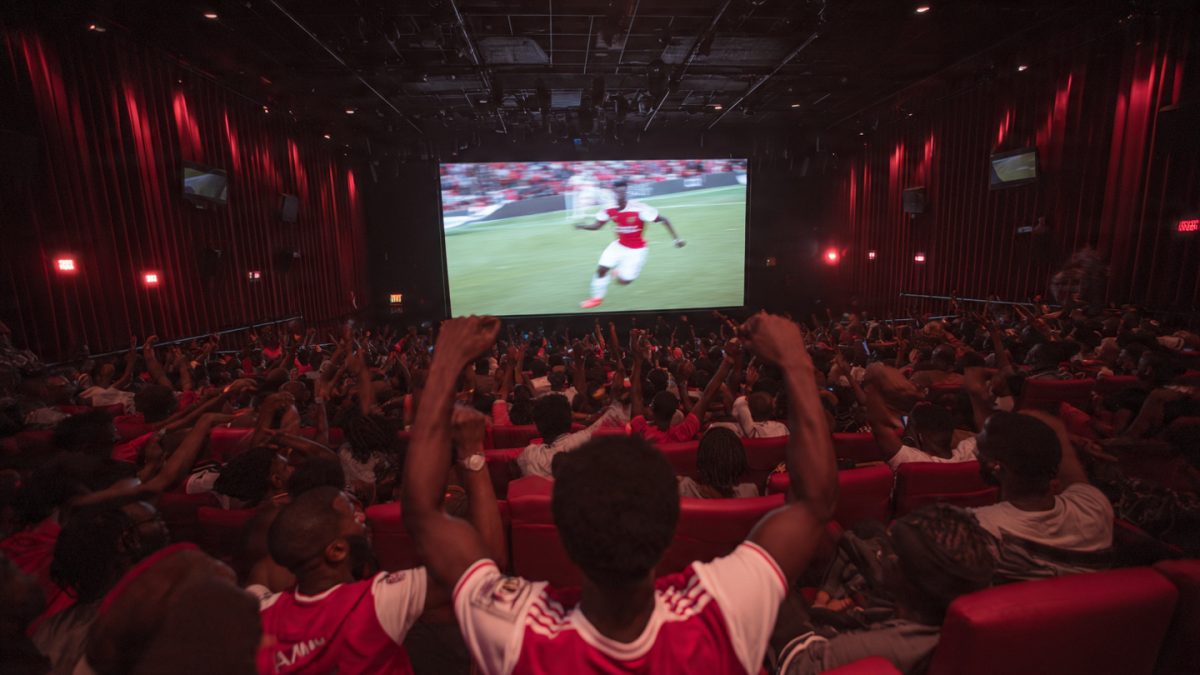
At Banex Mall, we have quietly become a place where that kind of privacy is possible. Not because we market it. Because the building itself discourages spectacle. From the outside, it looks unremarkable. That is the filter. Only people who know what is inside bother to walk through the doors. Those who do discover a mall that is bustling on the inside — 140+ shops, a cinema, restaurants, office suites, a rooftop lounge, a content studio, a church hall — and a general atmosphere of productive calm. The same atmosphere, I imagine, that Niniola and Ndika cultivated in their own life together.
What We Owe Each Other in Moments of Loss
The Nigerian entertainment community has begun responding to Niniola's loss with condolences. Pulse Nigeria extended its sympathies directly. Arise TV, Channels, The Sun, Vanguard, Daily Post — every major outlet has covered the story. But the coverage itself raises a delicate tension. How do you honour a woman's grief when her entire life's work has been about keeping that grief's source private?
Here is what I think we owe her, and what we owe anyone who suffers a loss they did not choose to make public: we owe them the dignity of silence. Not indifference. Silence. The kind of silence that says: I see your pain. I will not make it content. I will not share your photos. I will not speculate about the cause. I will not perform sympathy for an audience. I will simply hold space and wait until you tell me what you need.
Niniola wrote three sentences on Wednesday morning. That was all she chose to give us. It is enough. The cause of death has not been disclosed, and it does not need to be. The 13 years speak for themselves. She loved him. He loved her. The marriage was real, even if it was invisible. And now she is navigating a grief that most of us cannot imagine, in a city that rarely allows people to mourn without an audience.
The Rooms We Keep for Ourselves
There is a lesson in Niniola's story that extends beyond entertainment. It is about the right to keep certain rooms locked. Not because they contain shame, but because they contain the only things that truly belong to you. Your marriage. Your grief. Your quiet joy. Your 3 a.m. conversations. Your photographs that never make it to Instagram.
At Banex Mall, we see this principle at work every day. The celebrity who eats lunch alone at a corner table and is left in peace. The business executive who holds a strategy session in a Mezzanine office with the door closed. The family that watches a film in our cinema without being jostled by crowds. The musician who records in our content studio without a single camera phone pointed at the door.
We did not design the mall to be a sanctuary. But it has become one, because we understand something that Niniola and Michael Ndika understood for 13 years: the most valuable things in life are not the ones you post. They are the ones you protect.
Michael Ndika was a systems engineer before he became a music executive. He built NaijaReview from a single blog into a multimedia platform that promoted African music when few others were paying attention. He co‑owned an NGO called Adopt‑a‑Child's Education. He managed Niniola's career for over a decade. He lived deliberately away from the spotlight, and he died with his private life intact. That is not a failure of visibility. That is a triumph of boundaries.
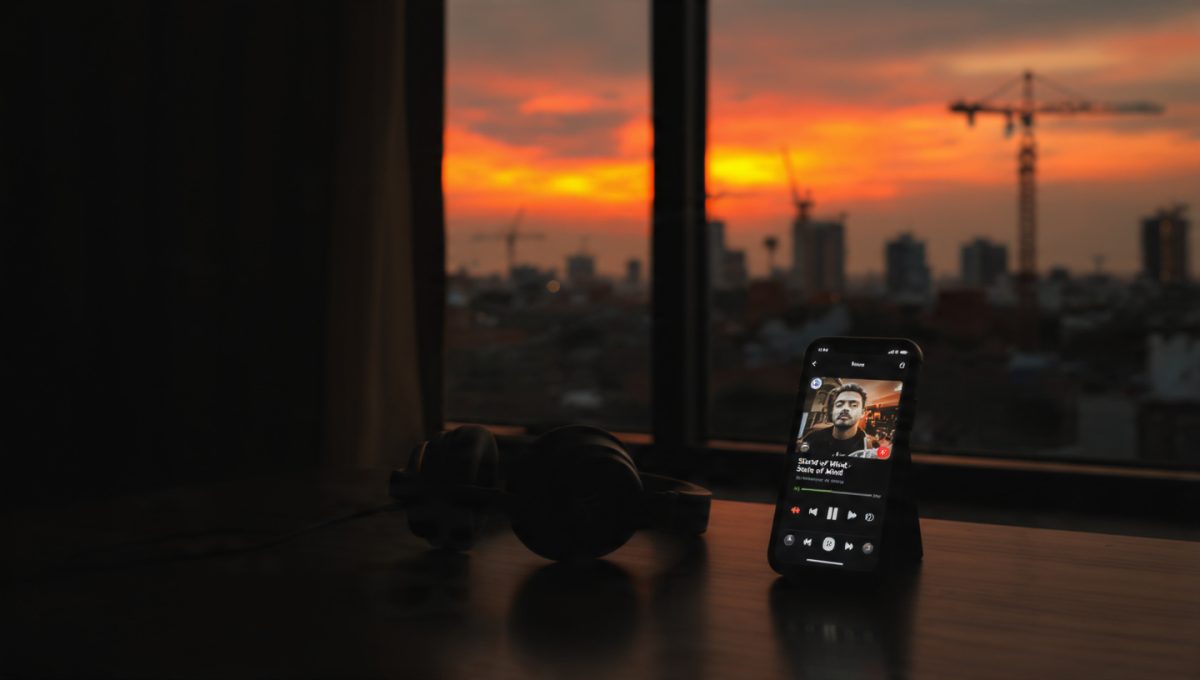
Drive into Banex Mall via Akiogun Road, opposite Maroko Police Station. Park in any of our 1,000+ free spaces. Walk through the ground floor. Sit in the Aureum Lounge on the fifth floor as the sun sets. Look out at the Lekki skyline. Think about what in your own life is worth protecting from the noise. And if you happen to be grieving something you have not shared with anyone, know that there is space here for that too.
Have you ever chosen to keep something deeply important completely private — a relationship, a loss, a struggle? What did that boundary protect, and what did it cost? Tell me in the comments. I read every single one.



No comments yet. Be the first to share your thoughts!